GDPR & CCPA-Compliant Legal Document Review & Privilege Log Generator
60% reduction in document review time with AI-generated privilege logs and relevance summaries
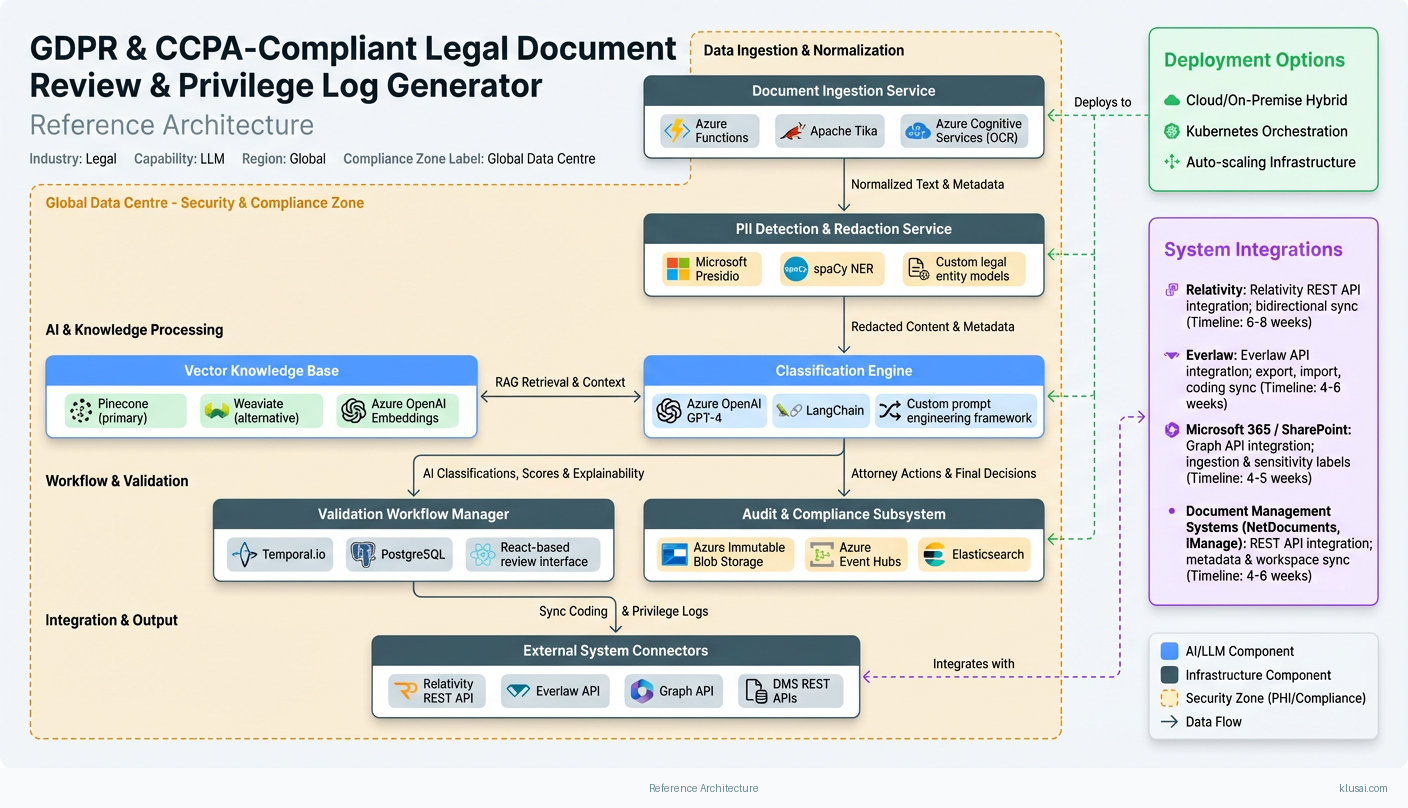
System Architecture
The Problem
The legal e-discovery market represents a $10-15B annual cost burden, with document review consuming massive resources and time across law firms and corporate legal departments[1]. A midsize litigation group recently cut contract review time by 60% using AI assistants that summarize terms, flag missing clauses, and compare documents to preferred language[2], yet most firms still rely on junior associates to manually create privilege logs, relevance summaries, and issue-coded memoranda after initial review—a repetitive, error-prone process that extends timelines and inflates costs.
The challenge is compounded by regulatory complexity: GDPR and CCPA impose strict requirements around data handling, retention, and transparency in document processing workflows. Current AI solutions often lack defensible audit trails, explainability mechanisms, and governance controls required by regulators and courts, creating compliance risk alongside efficiency gains[3]. Additionally, corporate legal departments are adopting AI twice as fast as outside counsel (52% vs. 23% adoption rates)[4], creating pressure on law firms to match capability or lose work to in-house teams equipped with AI-generated drafts requiring review.
Existing solutions treat AI as a standalone tool rather than an integrated, governance-first system. The market is shifting toward workflow-embedded AI with human-in-the-loop validation, explainability by design, and provable transparency mechanisms—capabilities that will become table stakes for enterprise buyers by mid-2026[5]. Firms that deploy AI strategically with robust compliance controls will capture the competitive advantage; those treating it as a checkbox feature will struggle to justify ROI and manage regulatory exposure.
Our Approach
See implementation details below.
Implementation Roadmap
Phase 1: Foundation & Knowledge Base Development
Phase 2: Training Data Creation & Model Validation
Phase 3: Integration & Parallel Running
Phase 4: Rollout & Optimization
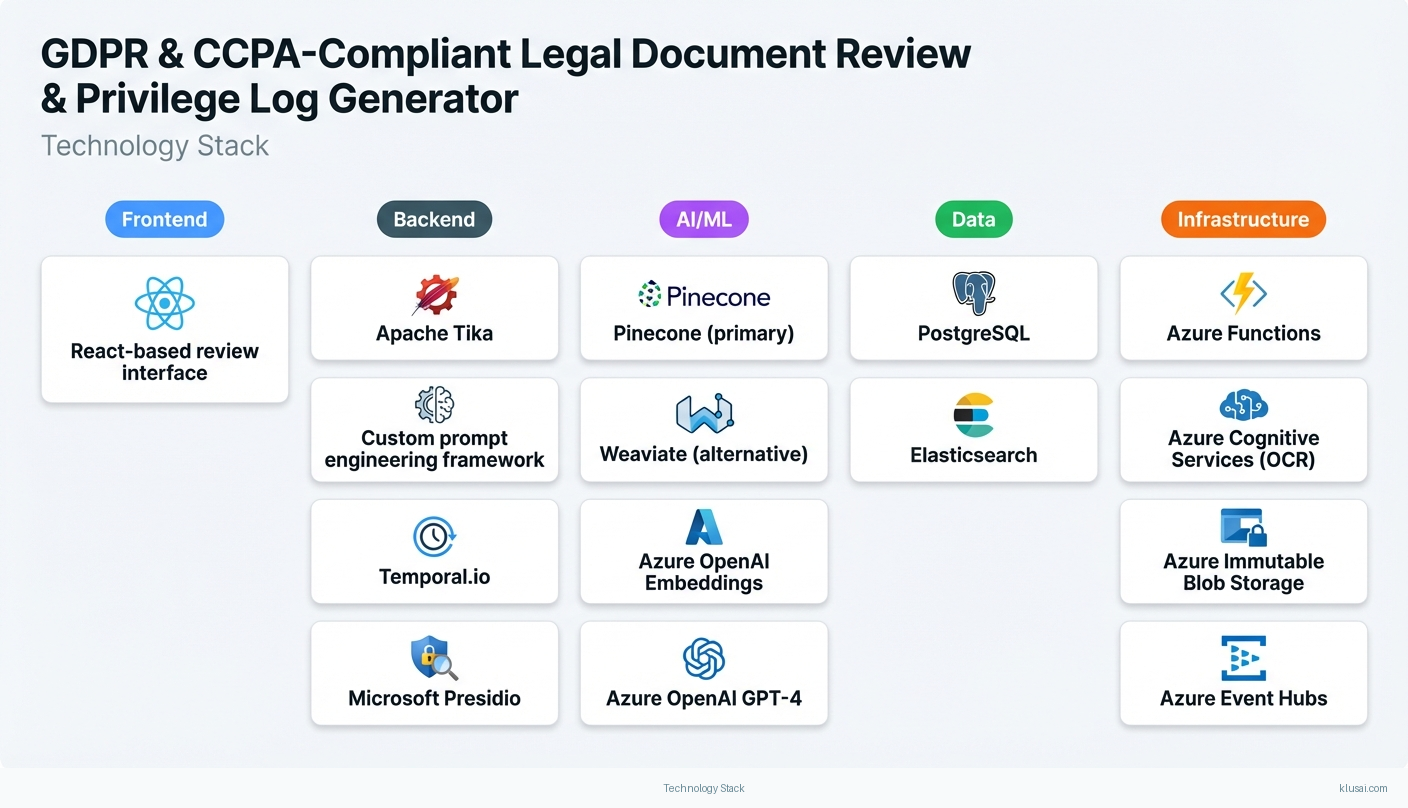
Technology Stack
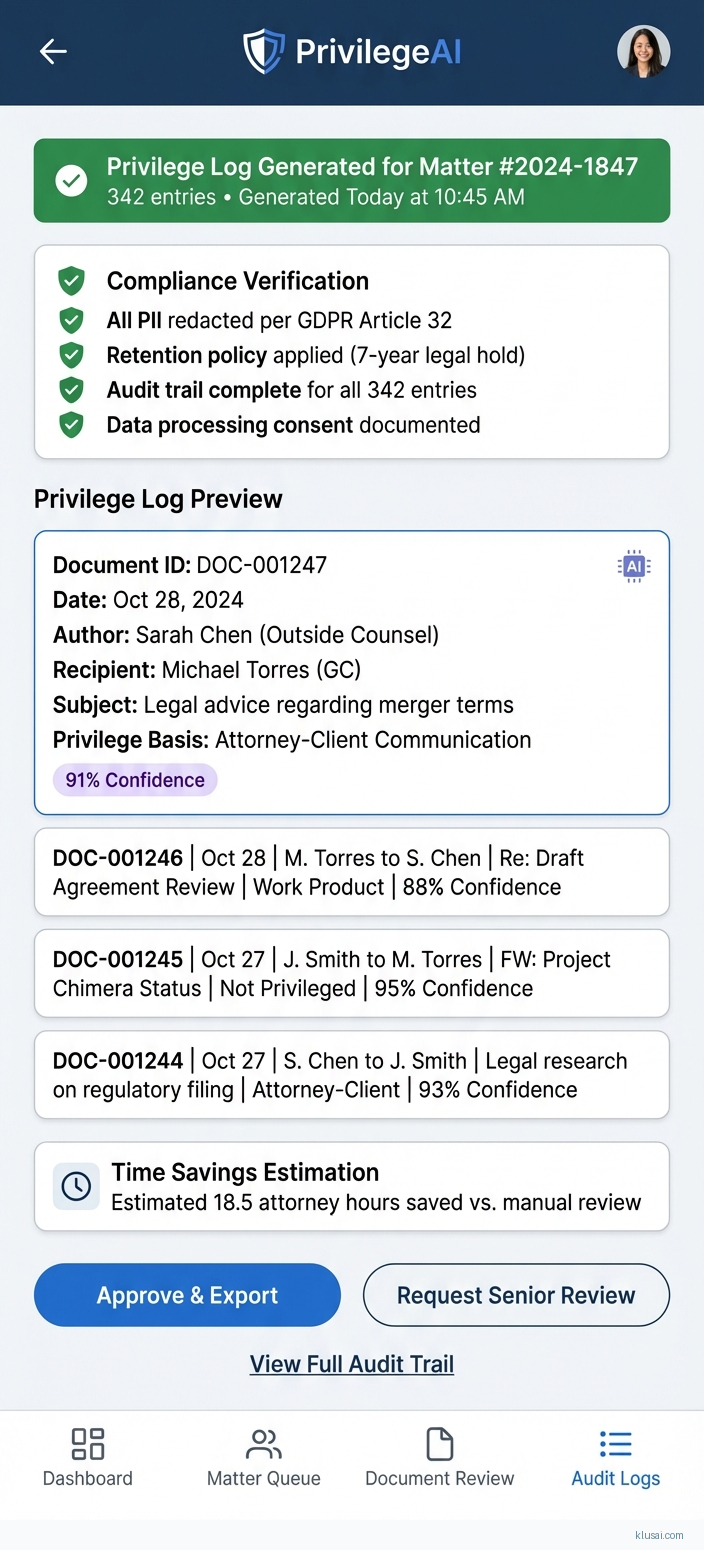
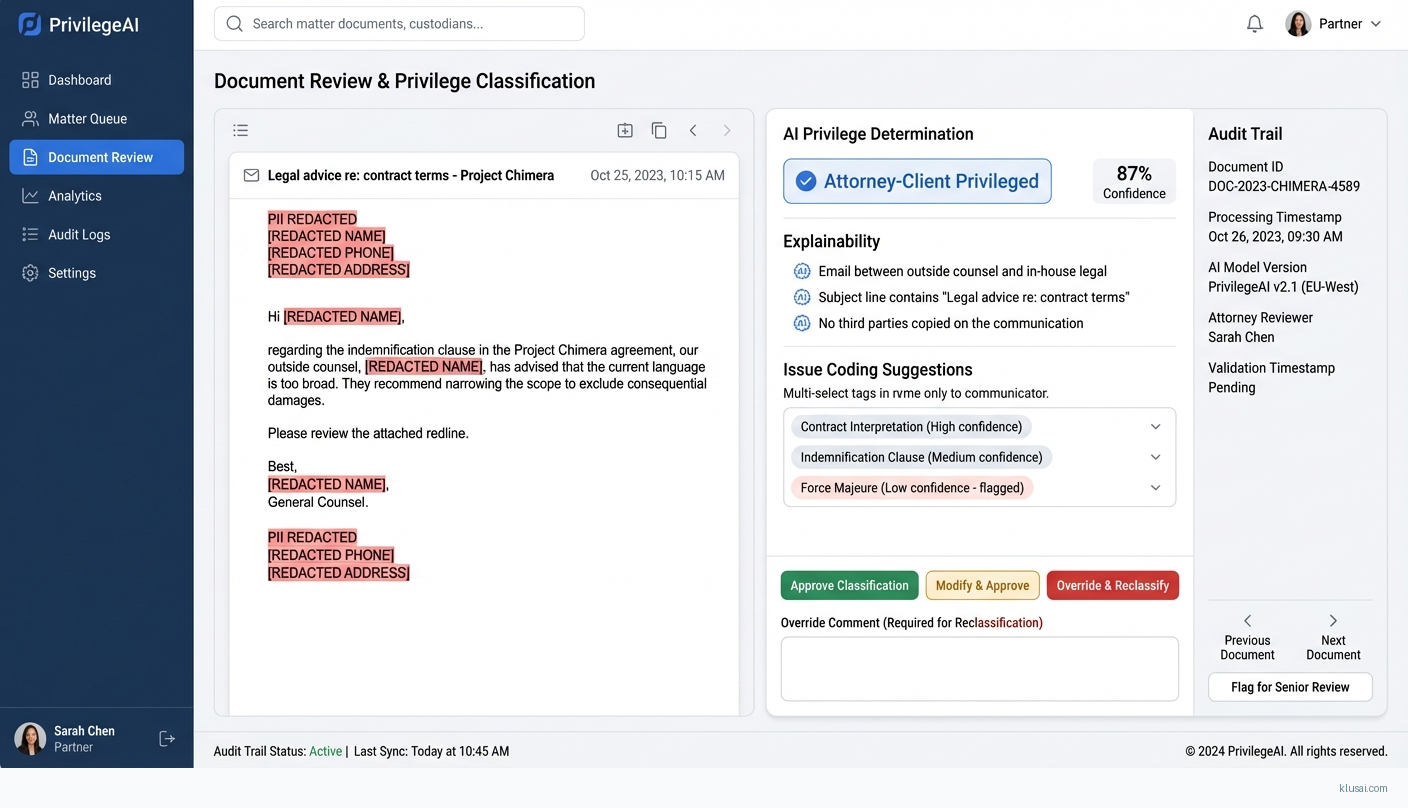
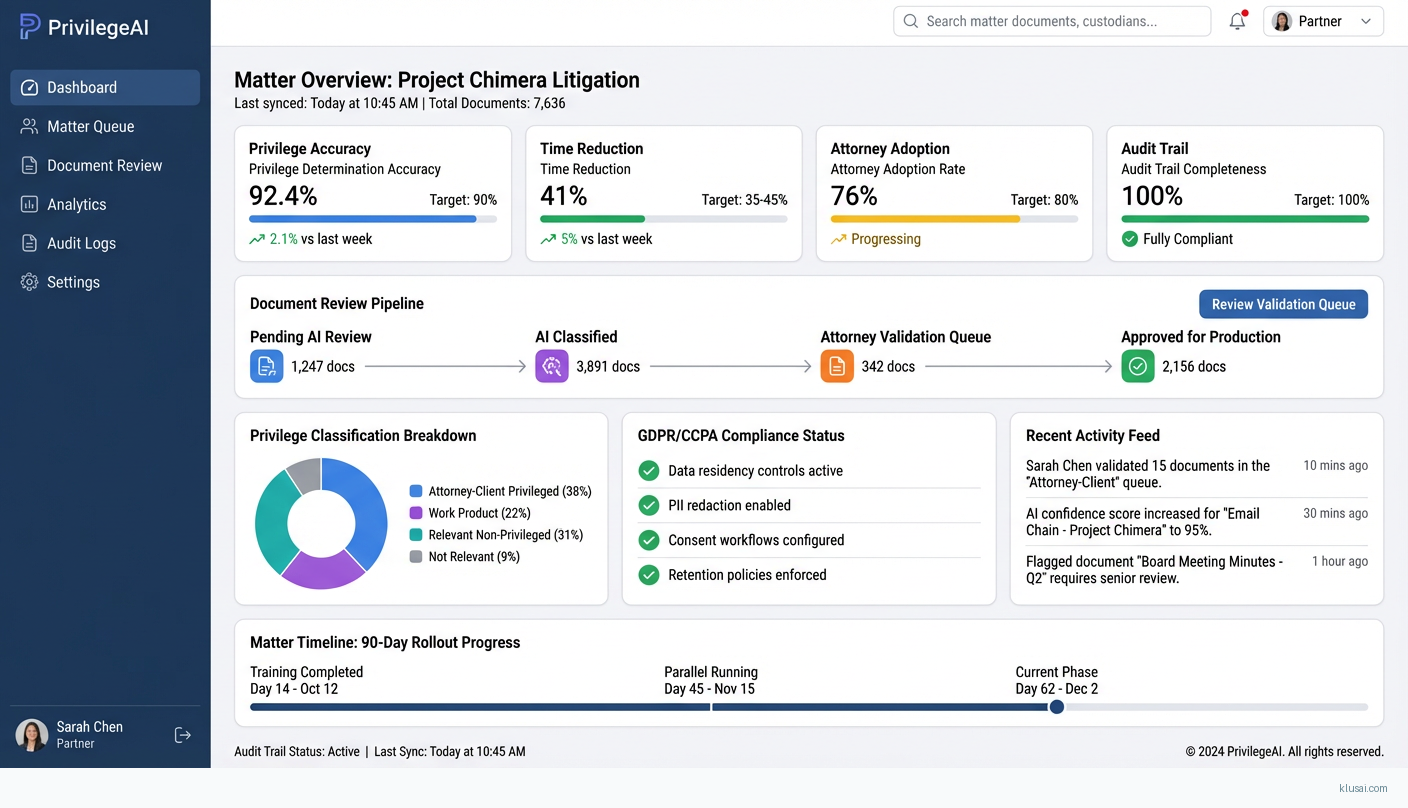
Interface Previews
Conceptual UI mockups illustrating the end-user experience.
Want to turn this blueprint into reality?
We designed this plan. Let's build it together.